
Wasp & Bee Control
Wasp and bee stings are painful -- and for people with allergies, potentially life-threatening. Our specialists remove nests safely using the right protective equipment and methods.
The Danger of DIY Nest Removal
A typical wasp nest contains between 3,000 and 10,000 wasps at peak season -- and disturbing a nest even slightly triggers an immediate, co-ordinated mass attack. Unlike bees, wasps can sting repeatedly without dying and release alarm pheromones that signal the entire colony to attack.
For people with allergies to wasp or bee stings, even a single sting can trigger anaphylactic shock -- a life-threatening emergency. Children and the elderly are particularly vulnerable. Professional removal with the correct PPE and insecticides is the only safe approach.
We treat wasp nests and safely relocate bee swarms where possible -- supporting honey bee conservation while protecting your family. Our technicians carry full protective suits and the correct equipment for every job.
Wasps & Bees We Treat in Gauteng
Paper Wasps
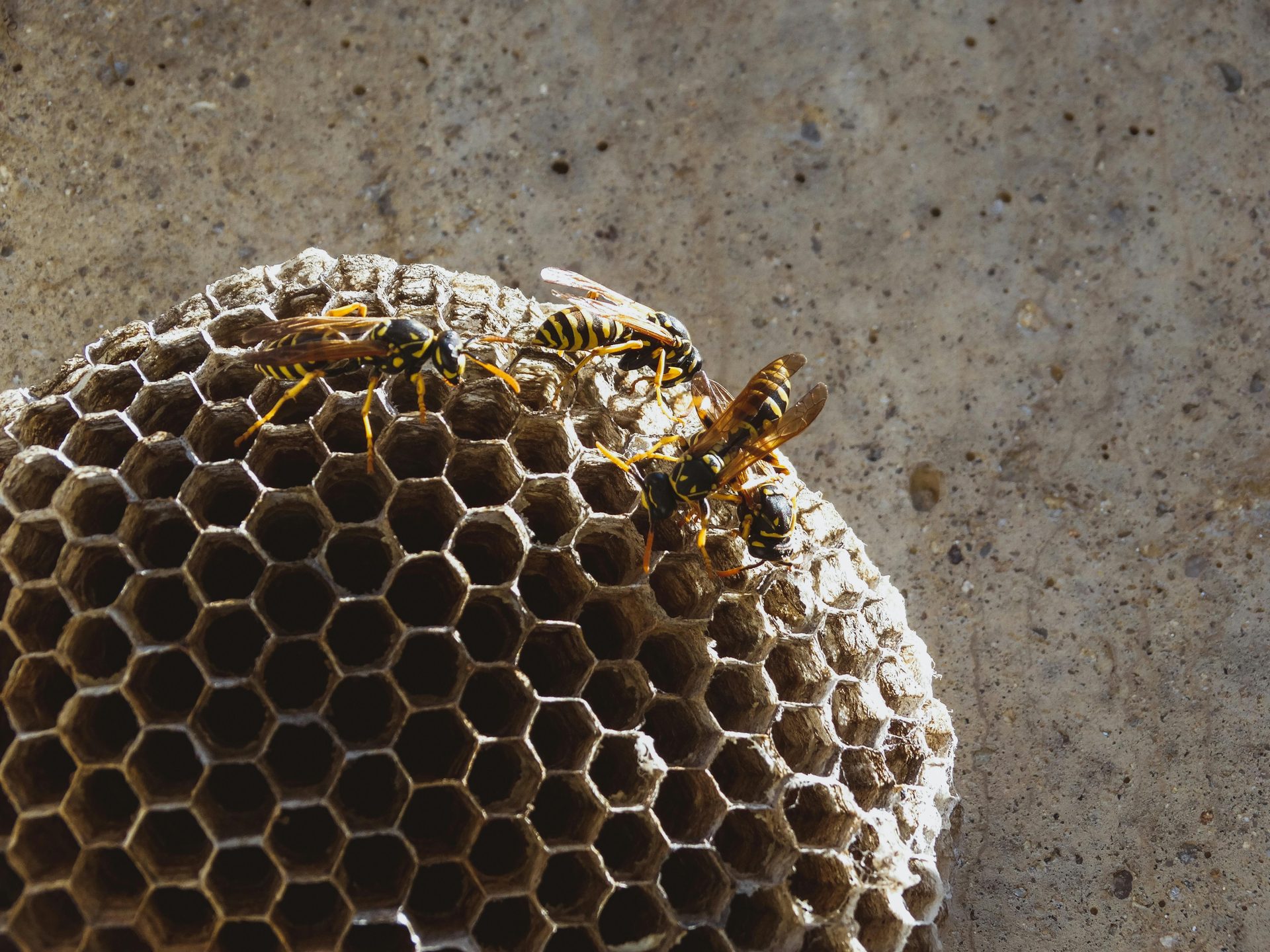
The most common wasp in Gauteng -- build open, umbrella-shaped paper nests under eaves, in trees, and inside roof spaces. Aggressive when disturbed. Nests can contain several hundred wasps.
European Wasp
Larger, more aggressive than paper wasps. Build enclosed nests in wall cavities, roof voids, and underground. Colonies can reach 15,000 workers and are particularly dangerous in late summer.
Honey Bee (Swarm)
Swarms settling on trees, walls, or structures are often just resting before finding a permanent home. We call a beekeeper where possible to relocate the swarm rather than destroy it -- supporting conservation.
Honey Bee (Established Colony)
Established colonies inside walls, roofs, or trees must be carefully removed -- otherwise the large honey store left behind attracts ants, rodents, and secondary pests. Full removal required.
Carpenter Bee
Large, solitary bees that drill circular holes in wooden structures -- decking, pergolas, roof beams, and fascias. Not aggressive but cause significant timber damage over time.
Bald-Faced Hornet
Large, aggressive hornets building large grey paper nests. Found mainly in trees. Extremely dangerous to disturb -- professional removal with full PPE only.
How We Safely Remove Nests
Wasp Nest or Bee Swarm? Call Us Now.
Emergency nest removal across all of Gauteng. We respond fast -- keeping your family safe from stinging insects.